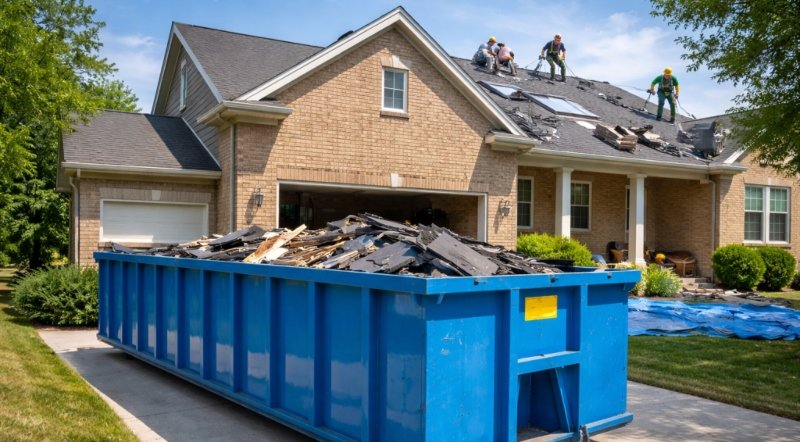
Roof replacement projects on single-family homes generate a surprising amount of debris in a very short period of time. Shingles, underlayment, flashing, nails, and damaged decking can accumulate quickly once tear-off begins, and without a reliable disposal solution, the jobsite can become disorganized almost immediately. For roofing contractors, efficient debris management is just as important as scheduling crews and delivering materials.
Unlike larger commercial projects, residential roofing work takes place in tighter spaces where driveways, landscaping, and homeowner access all need to be considered. Contractors must balance productivity with property protection while keeping the project moving quickly. Dumpster rentals provide a centralized and efficient way to manage roofing debris from start to finish, helping contractors maintain cleaner jobsites and smoother operations.
Why Roofing Projects Produce Large Volumes of Debris Quickly
Roof tear-offs move fast, especially when experienced crews are involved. In a matter of hours, thousands of pounds of shingles and related materials can come off a single roof. While shingles may not look especially bulky, they become extremely heavy once accumulated in piles or containers.
In addition to shingles, contractors often remove damaged decking, vents, flashing, and underlayment during the replacement process. Packaging from new roofing materials also contributes to the waste stream as installation begins. Because all of this debris is generated in a compressed timeframe, contractors need a disposal plan that can keep pace with production.
Without continuous debris removal, materials can spread around the property and interfere with workflow. Planning ahead helps prevent these issues before they affect the project.
Using Dumpsters to Centralize Roofing Debris
One of the biggest advantages of renting a dumpster for roofing work is having a centralized location for debris disposal. Instead of piling materials throughout the yard or driveway, crews can direct everything into a single container throughout the tear-off and installation process.
Working with services like roofing dumpster rentals helps contractors keep debris contained and organized from the beginning of the project. A dedicated container also reduces the need for repeated hauling or temporary staging areas that take up valuable space.
Centralized disposal improves site organization and helps roofing crews work more efficiently throughout the project.
Choosing the Right Dumpster Size for Roofing Projects
Selecting the correct dumpster size is critical for maintaining efficiency during a roof replacement. A container that is too small can fill before the tear-off is complete, forcing contractors to pause work while waiting for removal or replacement. A container that is too large may create placement challenges on smaller residential properties.
Contractors should consider several factors when estimating size requirements, including roof square footage, the number of shingle layers being removed, and whether decking replacement is expected. Older roofs with multiple layers can generate significantly more debris than standard tear-offs.
Planning for sufficient capacity helps prevent interruptions and keeps the project moving on schedule.
Strategic Placement to Support Workflow
Dumpster placement has a direct impact on how efficiently roofing crews can operate. Ideally, the container should be positioned close enough to the home to reduce carrying distance while still allowing safe access for workers and equipment.
Driveways are the most common placement location because they provide stable access for delivery trucks and easy loading for crews. However, contractors must also consider homeowner access, landscaping, and surrounding structures when selecting the exact position.
Proper placement reduces unnecessary movement and supports faster cleanup throughout the project. Every step saved helps improve productivity during fast-paced roofing work.
Protecting the Property During Debris Removal
Residential roofing projects require extra attention to property protection. As debris is removed from the roof, contractors must ensure that materials do not damage driveways, lawns, or nearby landscaping.
Using a dumpster allows debris to be directed into a controlled disposal area instead of spreading throughout the property. Contractors can also use protective boards or placement strategies to reduce the impact on driveway surfaces beneath the container.
Maintaining a cleaner and more organized site improves the homeowner experience and reflects positively on the contractor’s professionalism.
Attention to detail during disposal helps protect both the property and the project timeline.
Maintaining Continuous Cleanup During Tear-Off
One of the most effective ways to manage roofing debris is to maintain continuous cleanup throughout the tear-off process. Instead of waiting until the end of the day to remove waste, crews should dispose of materials as they are removed from the roof.
This approach keeps the work area clear and reduces the risk of debris spreading around the property. Continuous cleanup also improves safety by limiting loose nails, shingles, and other hazards on the ground.
Maintaining steady debris flow helps crews stay organized and focused on installation work once tear-off is complete.
Supporting Crew Efficiency and Productivity
Roof replacement projects are highly dependent on speed and coordination. Crews work in sequence, and delays in one area can quickly affect the entire schedule. Efficient debris handling supports productivity by ensuring that workers can move freely and maintain a steady pace.
A properly placed dumpster reduces the time crews spend carrying materials across the property or searching for disposal areas. This allows workers to focus on roofing tasks rather than cleanup logistics.
Improved efficiency contributes directly to faster completion times and smoother operations on-site.
Managing Heavy Roofing Materials Safely
Roofing debris becomes extremely heavy once accumulated, especially when dealing with asphalt shingles. Contractors must monitor how materials are loaded into the dumpster to avoid uneven distribution or excessive weight in one area.
Proper loading practices help maximize container space while maintaining safe hauling conditions. Even distribution of materials also improves overall handling efficiency and reduces the risk of overloading.
Careful management of heavy debris is essential for maintaining smooth disposal operations throughout the project.
Adapting to Unexpected Repairs and Added Debris
Roof replacement projects often uncover hidden issues such as water damage or deteriorated decking once tear-off begins. These unexpected repairs can significantly increase the amount of debris generated during the project.
Contractors should be prepared to adjust their disposal plan if additional materials need to be removed. This may involve scheduling extra pickups or upgrading to a larger container if conditions change.
Flexibility helps ensure that disposal continues to support the project even when unexpected challenges arise.
Preparation allows contractors to adapt without slowing down workflow.
Avoiding Common Roofing Disposal Mistakes
Several common mistakes can disrupt debris management during residential roof replacements. These include underestimating debris volume, placing the dumpster too far from the work area, and allowing debris to accumulate around the property.
Another frequent issue is failing to coordinate container delivery before materials and crews arrive on-site. These problems can lead to delays, reduced efficiency, and a less organized job site.
Avoiding these mistakes requires planning ahead and integrating disposal into the overall roofing strategy. A proactive approach helps maintain smooth operations from start to finish.
Supporting Faster and Cleaner Project Completion
Effective dumpster use contributes directly to the success of residential roofing projects. When debris is managed properly, crews can work more efficiently, the property remains cleaner, and transitions between tear-off and installation happen more smoothly.
This leads to faster completion times, improved homeowner satisfaction, and a more professional job site overall. Roofing contractors who prioritize waste management gain an advantage in maintaining efficient and organized operations.
Efficiency improves when debris removal is treated as part of the workflow rather than a separate task.
Dumpster rentals are an essential part of roof replacement projects on single-family homes. The fast pace of roofing work and the heavy volume of debris generated make organized disposal critical for maintaining productivity and protecting the property.
By choosing the right container size, placing it strategically, and maintaining continuous cleanup, roofing contractors can keep projects running smoothly from tear-off to final installation. Flexibility and proper loading practices further support efficient operations.
When debris management is integrated into the roofing process, contractors can reduce delays, improve workflow, and deliver cleaner, more efficient residential roofing projects. For more details, Click here