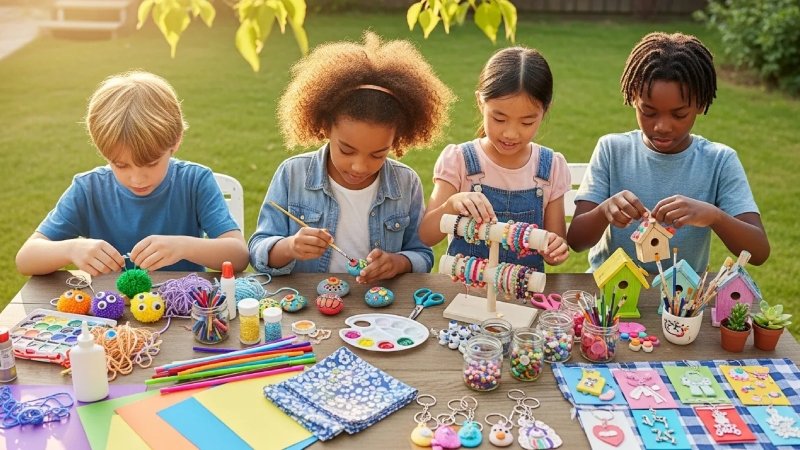
Finding meaningful ways to keep children entertained without relying on screens has become a priority for many parents and teachers. Fortunately, combining hands-on DIY projects with educational games creates the perfect balance between creativity and learning. These activities not only keep kids engaged but also encourage problem-solving, communication, and critical thinking.
1. Create Homemade Greeting Cards
Give children colorful paper, stickers, markers, and crayons to design greeting cards for family members or friends. This activity encourages creativity while improving fine motor skills.
2. Build Nature Art
Collect leaves, flowers, and small twigs during a walk outdoors. Kids can arrange them into beautiful artwork or seasonal collages while learning about nature.
3. Make Simple Paper Crafts
Paper folding, paper animals, and decorative bookmarks are inexpensive projects that help children improve concentration and hand-eye coordination.
4. Design a Family Memory Book
Allow children to draw pictures, write short stories, and paste printed photos into a scrapbook. It becomes a meaningful keepsake while encouraging storytelling and writing practice.
5. Paint Flower Pots
Decorating small flower pots with bright colors gives children an opportunity to express themselves while learning about gardening and responsibility.
6. Solve Educational Word Games
Learning doesn’t have to feel like homework. Parents and teachers can introduce free online word search puzzles that help children expand their vocabulary, improve spelling, and strengthen pattern recognition in an enjoyable way. Printable puzzles also make excellent classroom activities and rainy-day projects at home.
7. Build DIY Puppets
Paper bags, socks, or craft sticks can easily become fun puppets. Children can create their own characters and perform short stories, building imagination and communication skills.
8. Create Alphabet Treasure Hunts
Hide letters or simple words around the room and let children search for them. This active learning game combines movement with literacy development.
9. Enjoy Daily Learning Challenges
Adding a daily word search puzzle to a child’s routine creates a fun educational habit. Spending just a few minutes solving new puzzles each day helps reinforce vocabulary while keeping young minds active and curious.
10. Build Recycled Craft Projects
Cardboard boxes, empty paper rolls, bottle caps, and other recyclable materials can become toy cars, castles, robots, or animal models. Recycling crafts teach creativity while promoting environmental awareness.
Final Thoughts
Children learn best when education feels enjoyable. By combining simple DIY crafts with engaging vocabulary games, parents and teachers can reduce screen time while encouraging creativity, confidence, and independent thinking. Whether it’s making handmade crafts, exploring nature, or solving educational word puzzles, these activities provide valuable opportunities for children to learn through play and develop skills that will benefit them for years to come.