When it comes to kitchen design, trends can be quite a polarizing topic. Some prefer to ignore them, viewing them as inconsequential, impractical, and ultimately a waste of time and resources. Others follow them religiously, making efforts to ensure their kitchens stay up to date with the latest styles and design concepts.
Both these stances are rather extreme and overlook the fact that trends are not about imposing hard rules or guilt-tripping homeowners into updating their spaces more often than necessary. Far from being rigid dictates, trends are fluid, adaptable, and can be quite helpful if you know how to approach them. So, instead of dismissing them altogether or following them blindly, let’s try to look at kitchen design trends with a critical eye and see where their value truly lies.
The case for considering kitchen trends
If you’ve always regarded design trends as nothing more than fleeting fads that come and go without any logic or purpose, here are a few reflections that might make you change your mind.
Trends reflect lifestyle and societal shifts
Kitchens, their role and significance, have evolved a lot over the years, in keeping with people’s shifting preferences and needs. Design trends have evolved alongside, reflecting those changes quite vividly and thus providing a detailed record of how these spaces have transformed over time.
For instance, back in the day, the kitchen was a room dedicated solely to storing and preparing food, tucked away in the basement, or outside the house, in a separate annex, so no one really cared how it looked. In the early 20th century, urbanisation and the widespread adoption of electricity in households brought the kitchen inside, making it more efficient and hygienic, so white became the dominant colour to represent cleanliness.
Later on, the functionality of the kitchen started to expand, and its appearance also began changing. In the 50s, suburban development and post-war optimism led to the kitchens becoming colourful, family-focused spaces, featuring bold hues. Pink kitchens were quite the rage at the time, and the concept of a work triangle (stove, sink, fridge) was introduced to maximise efficiency. In the 70s and 80s, as technology advanced, kitchens began incorporating high-tech, stainless-steel features and sleek, minimalist, handleless cabinet units.
In the 90s and 2000s, the shift toward casual living led to the popularization of kitchen islands, serving as multi-functional areas for cooking, working, and socializing. The open plan design gained ground, removing walls and blending the kitchen with living and dining areas, creating environments perfect for socialisation and entertainment. Currently, sustainability concerns and the fast pace of modern lifestyles have put eco-friendly materials, smart technology, and flexible, welcoming spaces that double as work-from-home areas at the heart of kitchen design.
So, by looking at the most popular kitchen design trends throughout history, you’re not just observing the coming and going of different style preferences, but you’re actually provided with a snapshot of the societal shifts that have marked people’s lives across different eras.
Trends serve as a source of inspiration
Another aspect that we need to emphasize when it comes to trends is their overarching role in kitchen design. They don’t represent strict rules and don’t try to impose a certain design concept at the expense of past styles. What trends do best is offer guidance on how you can achieve a certain look by bridging practical needs with tech advances and aesthetic preferences. They’re not meant to be followed blindly, but lend themselves to different interpretations.
Let trends inspire fresh ideas and encourage creative thinking instead of treating them as fixed standards. Planning a kitchen renovation or remodel? Discovering the latest kitchen design trends can spark fresh ideas and help you transform your space with confidence.
Trends can enhance functionality and comfort
What many peopled to forget or may not be aware of is that design trends are not just about the visuals. Evolving designs focus just as much on functionality and creating interiors that not only look pleasing but also adapt and address the daily requirements of modern living. Emerging trends embrace innovation by introducing advanced technologies that enhance mobility, simplify cooking, and make cleaning more efficient.
Trends can increase property value
By staying up to speed with the latest trends in kitchen design, you also have the possibility to increase the value of your home, should you want to sell it and get a good price for it. Buyers are often willing to pay more for a home that feels modern and functional, so a kitchen designed according to the most recent styles plays a key role in increasing a property’s appeal and value.
The trends shaping the kitchens of tomorrow
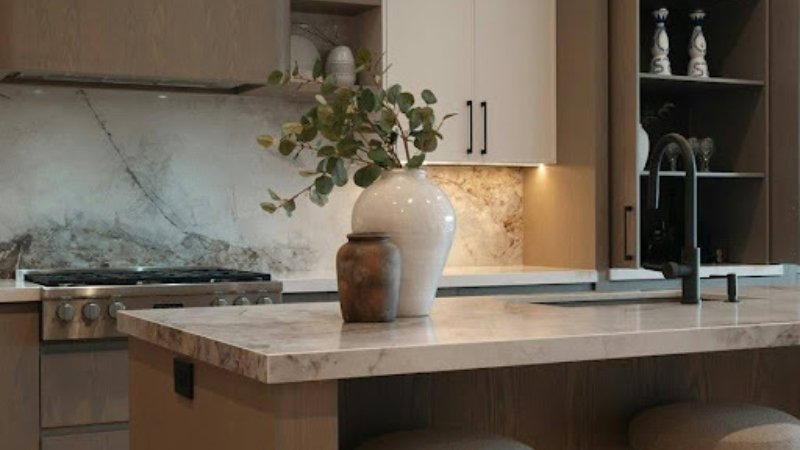
Now that we’ve established that kitchen design trends are worthy of your time and attention, what should we expect to see moving forward? Well, according to experts, the trends that are going to dominate the kitchen design scene in the future will focus on raw, authentic materials that connect indoor spaces to nature.
There’s going to be more curved corners, rounded shapes, and vintage silhouettes inspired by Art Deco styles, featured in elements like cabinetry, doorways, and kitchen islands, ensuring a soft, flowy aesthetic. Colour-wise, warm neutrals like mocha, taupe, and sandy beige will complement the organic theme and ensure a cohesive appearance.
Smart home technology is also expected to expand its presence in the kitchen, with intuitive tech features and highly performant appliances being seamlessly and subtly integrated into different areas, maximising space and flexibility, and simplifying routine tasks.
In the end, you need to remember that kitchen trends are not the enemy. Quite the contrary, they can be the catalyst for creating functional, efficient, and personalised spaces that align with your specific needs, so try to approach them with an open mind and make the most of upcoming design ideas. For more details, Click here